Showing posts with label culture. Show all posts

Sunday, 21 October 2012

Annoucement: the Revive series is LAUNCHED!

I want to make this particular entry, although there is only one work in the series right now. The launching of the Revive is like announcing my career, since I might spend the rest of my life researching, studying, experimenting, and discussing this theme. This moment is quite significant to me, because I have waited for so long!

Prologue of the Revive series is HERE

The Revive is, or at least will be, a body of works which explores the Hanfu Movement. The Hanfu Movement is a cultural revival movement which has begun in 2003. A men named Wang,Le-tian wore a  home-made hanfu onto the street of Zhengzhou in northern-central China.This event had gained media attentions at the time, and had encouraged many people who share the same dream to start the restoration of Chinese cultures.

One of the photos in the original newspapers. Retrieved from Wikipedia <http://en.wikipedia.org/wiki/Hanfu_movement>
The main objective of the movement is to revive the Han Chinese clothing, commonly known as hanfu which was banned by the Manchurian leaders during the Qing Dynasty, and to find a way to integrate traditional cultural aesthetics and values into modern life style.

Monday, 2 April 2012

Lightbox: Artist Statement

This artist statement comes with an important supporting document which is still in progress.

Generally, the lightbox project is a combination of the light, the box, and the back-lit image. The light and box work together and affect the image. To emphasize their significance, I have experimented with colors, in order to alter the light and to reinforce the existence of the box as a concrete artistic object.

The image itself serves as both a summary of an end and an introductory to a new beginning. For instance, the image is thematically connected to the Interior Drawing.  It explores and comments on the possibility to adapt traditional culture into everyday life, particularly to revive the traditional Han Chinese Clothing. Furthermore, the aesthetic aspects of the image was based on the two video works I have completed during the term, including "Flow" and the Light and Movement experimental shorts. I have used similar visual elements and technique to construct the image, such as by using layers and the integration of hybrid media. In addition, this work marks the beginning of a future series which will centers on the Hanfu Movement, and thus the key words of this project is "landing" and "lightening up."

Wednesday, 28 March 2012

Lightbox v1.4: the Painting

Ma-mian qun (horse-face skirt; 馬面裙)

This was the digital painting I did for the lightbox, and part of the back-lit image. Initially I decided to add hand-drawn elements to the work to avoid potential copy right issues and plagiarism, because the original photo I had in mind came from a famous advertisement of a well-known merchant (in the hanfu sub-culture at least).
Guess what? I chose it because it was quite iconic in the development of modern hanfu.

Courtesy of Minghuatang

Besides, I thought adding personal touches to the work reinforced the aura of the piece, although some might argued that artistic aura was already lost in the new age of mechanical reproduction. Well! At least I had fun painting it, and I truly appreciated that there were maple-leaves pattern per-installed in Photoshop.

A historical relic (important: the skirt was displayed backward)

Tuesday, 20 March 2012

Lightbox v1.0: Q & A

Why to construct a lightbox?
  • Lightbox = light + box = both light and box are important elements to be taken into account. 
  • Back-lighting creates a strong sense of luminosity and reinforces transparency.
  • The box may represent the inversion of architecture

Some historical,ethnic,and contemporary precedents of lightbox:
  • commercial billboard and advertisement such as the vending machine in the Sofa lounge
  • cinema
  • slides
  • tracing on a light table
  • lantern
Retrieved from Sina News Center <http://news.sina.com.cn/o/p/2012-02-07/072723892250.shtml>
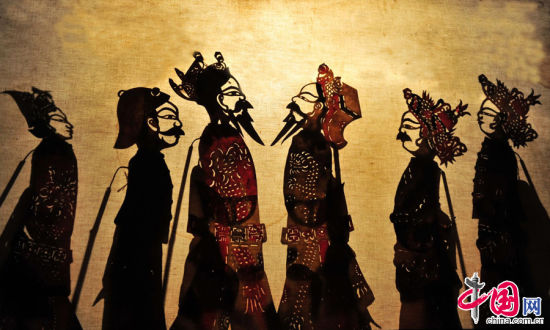
  •  Piying-xi play (皮影戲) or Shadow Puppetry
Retrived from <http://hb.sina.com.cn/news/g/2012-03-19/58241.html>
 I might use the last one as an aesthetic reference.

What does it mean to construct an image?
  • creating an artificial representation of space
  • if the image is fully based on photos, then it represents a man-made reality which is entirely based on fragments from the real world. How real can it be?
  • if the form is hybrid, such image implies the integration of the real and the representational. As the creator, I can control the degree of integration, and use it for the symbolism and/or narration of the work.

Tuesday, 6 March 2012

New Character: NPC

This is a minor non-playable character from the video game Chinese Paladin 5.

watercolour

The robe he is wearing is known as shenyi (lit. deep garment;深衣). This hanfu style is more than 3000 years old, and is a formal wear.
Generally there are two types of shenyi: zhi-ju (lit. vertical-wrapping front;直裾) and qu-ju (lit. diagonal-wrapping front;曲裾).  The one shown here is the former, because the front piece of the garment is straight and flat.

Zhiju-shenyhi might look similar to a Japanese kimono. However, they are very different in terms of making and wearing (this is a bit complicated, I might explain it in more details in the future).

Different parts of zhiju-shenyi. Retrieved from Wikipedia <http://en.wikipedia.org/wiki/Han_Chinese_clothing>
Headwear

Tuesday, 28 February 2012

New Character: NPC with a Fan

This is a minor non-playable character from the video game Gujianqitan. This painting is closely based on the original design of the  character.

watercolor, white gouache

In this painting, she is also wearing the qixiong-ruqun (chest-level skirt with a short garment). The outer skirt is slightly shorter than the under skirt, and it allows the latter layer to show through. This design is commonly used in the making of some modern hanfu.

A similar qixiong-ruqun from an ancient painting by Zhoufang

The hairstyle is called luo-ji (literal meaning:shell-like bun; 螺髻), because its shape resembles a seashell.


From an unknown book about ancient Chinese hairstyle

Wednesday, 18 January 2012

Finally Done!!!

NOTE: the following work was made for a discussion forum. I thought it would be fun to share it here since the blog was a sketchbook. Moreover, it was completed recently.

I started this watercolor painting last August, but then I procrastinated for nearly half a year, probably because I got scared and had a lot of homework during last Fall. Finally, I finished it last weekend.


This painting is part of the Traditional Clothing and Fan Art series. The clothing she wears here is a hanfu style known as qixiong-ruqun. She also wears a jacket-like garment on the outside, with a long sash which serves as decoration.
  • Qixiong means being at the chest-level, because the long skirt is tied above the chest-line. 
  • Ru-qun means, respectively, the upper garment and the skirt. It is a general term used to describe such combination.
This particular style had been popular in the Late Tang Dynasty, also known as Five Dynasties and Ten Kingdom Period.
Today, similar outfits have been used in some traditional Han Chinese weddings (as parts of the revival movement, of course).

Reference 1: mural painting from  Mogao Cave in Dunhuang

Reference 2: hairstyle

Note: I have replaced the original picture with one that has a better quality. It appears to be a bit greenish on Mac.
______________________________
Character based on video game Gujianqitan
Watercolor, acrylic, gouache

Saturday, 14 January 2012

Interior Project Plan v1.1: clothing design

I have just completed the clothing design for the project. This is a quick and extremely rough sketch to figure out the colors.


This clothing is based on the self-portrait which was used as the profile photo. There will be more information in the future, including a formal bibliography citing all the possible resources.

The clothing you see here is a hanfu (a.k.a. Han Chinese Clothing) style called shenyi (literal meaning: deep robe). In this particular case, because it consists of three layers of robes, it is also known as sanchong-yi, or triple-layered clothing.