Thursday, 22 March 2012

Lightbox V1.2: Sketches

This post was supposed to go after Lightbox v1.1: What to do and What I Want to Do? I had posted this one first because v1.1 was not finished at the time. 

Here were the quick sketches I did before I constructed the final image for the lightbox. At this point, I already had a vivid idea for what to do, so I only did two similar one.

Interestingly, the actual image turned out to be a combination of both.


Tuesday, 20 March 2012

Lightbox v1.0: Q & A

Why to construct a lightbox?
  • Lightbox = light + box = both light and box are important elements to be taken into account. 
  • Back-lighting creates a strong sense of luminosity and reinforces transparency.
  • The box may represent the inversion of architecture

Some historical,ethnic,and contemporary precedents of lightbox:
  • commercial billboard and advertisement such as the vending machine in the Sofa lounge
  • cinema
  • slides
  • tracing on a light table
  • lantern
Retrieved from Sina News Center <http://news.sina.com.cn/o/p/2012-02-07/072723892250.shtml>
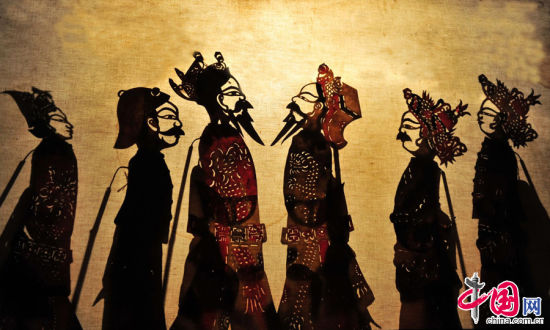
  •  Piying-xi play (皮影戲) or Shadow Puppetry
Retrived from <http://hb.sina.com.cn/news/g/2012-03-19/58241.html>
 I might use the last one as an aesthetic reference.

What does it mean to construct an image?
  • creating an artificial representation of space
  • if the image is fully based on photos, then it represents a man-made reality which is entirely based on fragments from the real world. How real can it be?
  • if the form is hybrid, such image implies the integration of the real and the representational. As the creator, I can control the degree of integration, and use it for the symbolism and/or narration of the work.

Wednesday, 14 March 2012

Different Forms of "Light"

The following is a supporting document for the upcoming artist statement of Light and Movement. I list the variety of light I have been used in the video project.
  • Light as a concrete man-made object
  • Natural light illuminating object
  • Florescent light illuminating water and pigments
  • Man made light penetrating plastic and water
  • Decomposition of natural light through camera lens
  • Superimposition of sunlight and the reflection of florescent light
  • Superimposition of direct streetlight and the reflection of florescent light at night
  • Reflection created by light
  • Shadows and light
  • Digital alteration of light
  • Light as a medium to display image and digital information

Tuesday, 6 March 2012

New Character: NPC

This is a minor non-playable character from the video game Chinese Paladin 5.

watercolour

The robe he is wearing is known as shenyi (lit. deep garment;深衣). This hanfu style is more than 3000 years old, and is a formal wear.
Generally there are two types of shenyi: zhi-ju (lit. vertical-wrapping front;直裾) and qu-ju (lit. diagonal-wrapping front;曲裾).  The one shown here is the former, because the front piece of the garment is straight and flat.

Zhiju-shenyhi might look similar to a Japanese kimono. However, they are very different in terms of making and wearing (this is a bit complicated, I might explain it in more details in the future).

Different parts of zhiju-shenyi. Retrieved from Wikipedia <http://en.wikipedia.org/wiki/Han_Chinese_clothing>
Headwear

Light and Movement v1.0

As suggested by the title, my next project is going to be about light and movement. Although I haven't really fully developed the idea yet, I want to talk about it briefly and write down some important points.
  • It's going to be a loose continuation of the hybrid media project. When I was worked on "Flow," I had discovered many things which I didn't actually use, and thus I would like to continue exploring them in this up-coming one.
  • The visual style will be very different from "Flow." I am currently thinking of a much more decorative, expressive and culturally relevant approach for this one. In other words, it will be less realistic.
  • The overall theme will be about the light, space, artificiality, and authenticity.
  • Some of the footage and ideas were left out from "Flow."
  • I am going to play with and use a lot of filters in Final Cut.
  • There will be sound effect: either a musical piece or a contrasting sound from nature or both.
  • Mirrors and glass are going to be extremely important.

Tuesday, 28 February 2012

New Character: NPC with a Fan

This is a minor non-playable character from the video game Gujianqitan. This painting is closely based on the original design of the  character.

watercolor, white gouache

In this painting, she is also wearing the qixiong-ruqun (chest-level skirt with a short garment). The outer skirt is slightly shorter than the under skirt, and it allows the latter layer to show through. This design is commonly used in the making of some modern hanfu.

A similar qixiong-ruqun from an ancient painting by Zhoufang

The hairstyle is called luo-ji (literal meaning:shell-like bun; 螺髻), because its shape resembles a seashell.


From an unknown book about ancient Chinese hairstyle

Hybrid Media Exercise: Two Important Terms

Note: this blog entry was supposed to be posted during the researching phase of the project. Because I had absolutely no clue what to do at the time, and I needed to connect these terms to the actual work (which was very open-ended), I decided to post them when the video was done.


Immersion (immersive virtual reality):

Immersion is a mental state in which the participants are unaware of their body or physical self, as if they are lost within another environment which is often artificial. Immersion is an important aspect of many artistic installations and video games. For example, when they are playing video games, the players are often lost in the virtual reality, and become unaware of their physical surroundings and time. In fact, some of the game developers are aiming for this effect, such as by using the first-person viewing angle in the games (one good example will be a recently released game called "Dear Esther").

Retrieved from IGN <http://www.ign.com/images/games/dear-esther-pc-100307/3589955>

In addition, immersion was one of the essential objective of my work "Flow." In my personal case, I tired to create an immersive atmosphere by juxtaposing highly contrasting visual and audio elements.


Haptic Visuality

In short, haptic visuality is the touch of eyes. For example, in a tactile blind contour drawing exercise, the artist is drawing down the objects without looking at the actual drawing, as he/she is trying to touch and feel the contour of the objects with his/her eyes, and then he/she translate this sensory information onto the paper. Moreover, during such exercises, any optical illusory information such as tonal shadow is omitted, because it is not attained by the sense of touching.

The reason I put this term  here is because haptic visuality is originally part of my work. I was going to incorporate parts of the blind contour drawings in the video, and thus it will adds to the hybridity of the work. However, due to the fact that the video was already quiet long, I decided to leave certain things out.

Artist Statement for "Flow"

The central theme of "Flow" is juxtaposition and paradox. By juxtaposing different visual and audio elements that I collected from different sources, I allow these contrasting elements to react together, in order to generate an emotional, mysterious atmosphere and immersion.

Furthermore, the title itself is referring to the way in which this work is constructed. In particular, I had started this work by brainstorming on a blank piece of paper, because I got nothing in mind when I received the topic. During the making of the video, I placed those elements on top of a feature footage according to the natural flow of ideas. As a result, narration is generally not important for the piece.

(a bibliography will be posted later)